
How to Source CBD Raw Materials: The 2026 Buyer's Guide
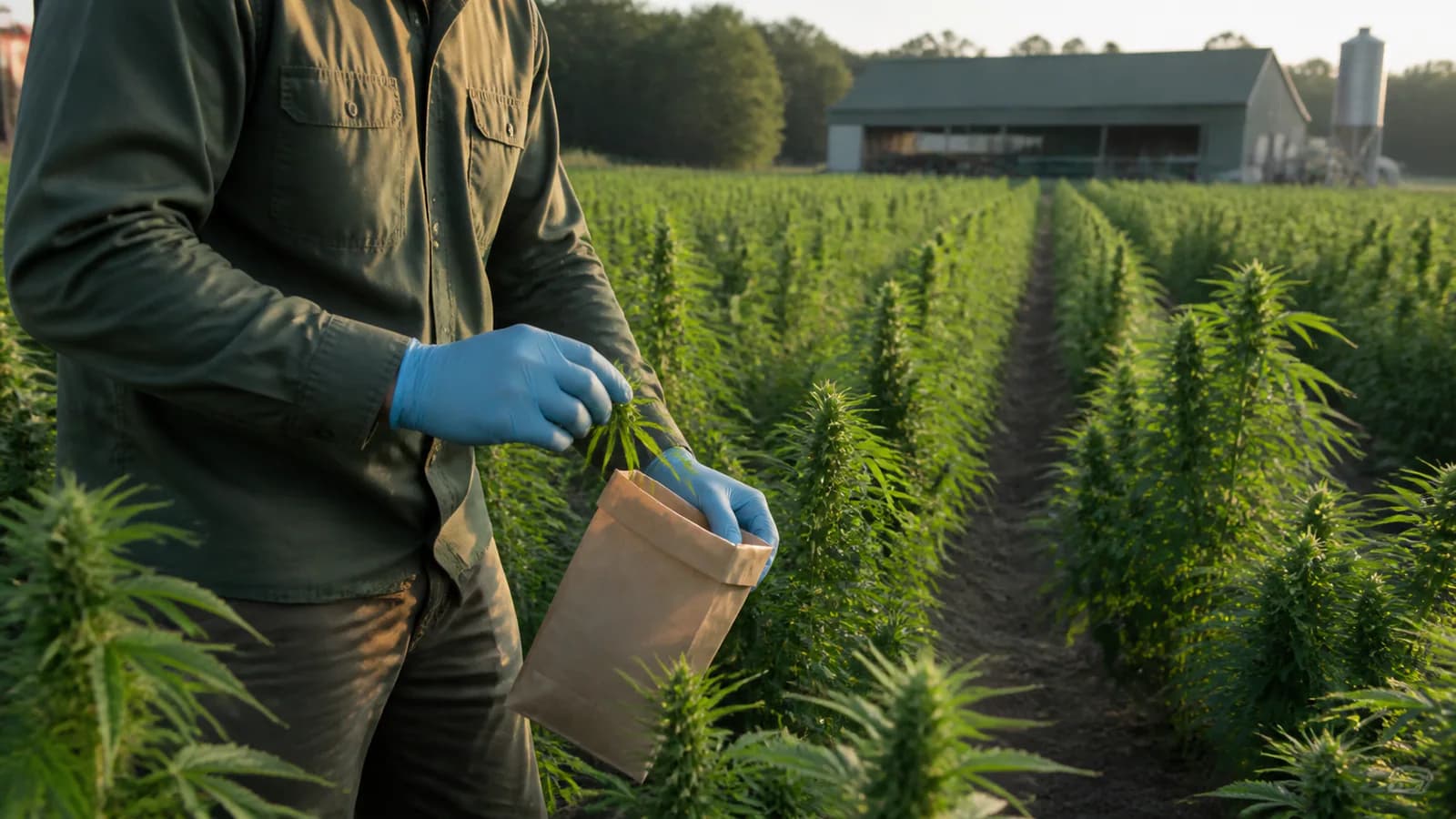
The wrong CBD supplier can kill your product line before it launches. Contaminated batches, mislabeled potency, failed third-party tests — these aren't edge cases. They happen regularly, and the fallout ranges from costly recalls to regulatory action. CBD raw materials sourcing is the single most important decision you make as a product manufacturer, and getting it wrong at scale is expensive.
This guide covers every dimension of the sourcing process: raw material types, hemp origin vetting, COA interpretation, extraction quality, 2026 pricing benchmarks, and supply chain risk management. Whether you're placing your first bulk order or renegotiating an existing supplier agreement, these frameworks apply.
Understanding CBD Raw Material Types
Before you contact a single supplier, know exactly which raw material your formulation requires. The type of CBD extract determines everything downstream — processing requirements, legal exposure, and product performance.
CBD Isolate: Maximum Purity for Precise Formulations
CBD isolate is the most refined form: a white crystalline powder that typically tests at 99%+ purity. It contains no other cannabinoids, terpenes, or plant compounds. That makes it the preferred choice for products where exact dosing matters — capsules, pharmaceuticals, food applications — and for brands operating in markets with zero tolerance for THC.
Wholesale CBD isolate in 2026 runs $450–$950 per kilogram, depending on purity certification, volume, and supplier qualifications. Anything priced significantly below $450/kg should trigger immediate scrutiny. That price floor exists for a reason: it reflects the cost of legitimate CO2 extraction, full-panel testing, and GMP-compliant production.
Pro Tip: Always ask for the cannabinoid profile breakdown in the COA, not just the CBD percentage. A "99% CBD" claim with an uncertified lab behind it means nothing.
Broad-Spectrum Extract: THC-Free with the Entourage Effect
Broad-spectrum distillate retains most of the plant's cannabinoids and terpenes but goes through an additional remediation step to remove THC below detectable limits (<0.01%). It's the middle ground between isolate and full-spectrum. You get the synergistic entourage effect without the legal exposure of THC.
This is the most common format for topicals, tinctures, and sleep products marketed to consumers who want "the full hemp experience" without THC concerns. The sourcing criteria are the same as full-spectrum, but you should specifically verify the THC remediation step and confirm it with a post-remediation COA.
Full-Spectrum Distillate: When the Whole Plant Matters
Full-spectrum hemp extract preserves all naturally occurring cannabinoids, terpenes, and flavonoids including trace THC (up to the legal 0.3% threshold in the U.S.). Many researchers and formulators prefer it for products where the complete cannabinoid profile is the marketing claim.
The sourcing risk with full-spectrum is higher. THC levels in the final product depend entirely on the starting biomass quality and extraction consistency. You need biomass with reliably consistent cannabinoid profiles — which means established hemp genetics, not opportunistic harvests.
Emerging Cannabinoids: CBG, CBN, and Water-Soluble Options
The 2026 market has shifted noticeably toward minor cannabinoids. CBG isolate now commands premium pricing for focus and gut health positioning. CBN serves the sleep segment. THCv is emerging for appetite and metabolic applications.
Water-soluble nanoemulsions represent another growth category, pricing at $390–$950/kg depending on cannabinoid type and particle size. These are essential for beverage applications where oil-based extracts won't mix. If you're developing beverages or fast-acting formats, evaluate nanoemulsion suppliers alongside standard extracts.
How to Vet CBD Raw Materials Sourcing: Hemp Origin and Quality
The quality of your finished product is determined long before extraction begins. It starts in the field. The genetics, soil, and agricultural practices behind the hemp biomass set a ceiling on everything downstream.
Why U.S. and EU Hemp Is the Safer Bet
U.S.-grown hemp operates under USDA licensing requirements and state-level agricultural oversight. Farms must comply with pesticide restrictions and submit to testing regimes that don't exist in many international markets. EU-certified organic hemp from Switzerland, Austria, and the Netherlands operates under equally rigorous frameworks.
Hemp grown in parts of Asia, by contrast, carries higher contamination risk — particularly heavy metals from soil accumulation and pesticides that aren't banned in those regions. The cost savings on biomass rarely justify the downstream testing failures, batch rejections, and potential recalls.
Common Mistake: Assuming "organic certification" from an unknown international supplier is equivalent to USDA or EU organic standards. Ask for the specific certifying body and verify it independently.
Hemp Potency Benchmarks: What 15% CBD Biomass Means for You
Industry consensus in 2026 is that premium CBD isolate production requires hemp biomass testing at 15% CBD or higher. Higher starting potency means less plant material to process, fewer extraction passes, and reduced contamination risk from plant compounds that would otherwise require additional purification.
When you request supplier documentation, ask specifically for the average CBD biomass potency from their farming partners. Reputable suppliers can provide this data. They maintain ongoing relationships with certified farms and track genetic performance across harvests.
Biomass testing below 8–10% CBD is a warning sign for isolate production. It's not necessarily problematic for whole-plant extracts, but it suggests opportunistic sourcing rather than quality-controlled farming relationships.
Farm Traceability and QR Code Documentation
Batch traceability has become a standard feature among premium suppliers in 2026. QR codes on product labels now link to harvest dates, extraction lot numbers, farm coordinates, and test results. This isn't just a marketing feature. It's essential for audit defense.
When a regulator or retailer questions a batch, being able to pull up a complete chain-of-custody document in minutes is the difference between a 20-minute conversation and a three-week crisis. Ask potential suppliers whether their batches are fully traceable back to the farm, and whether that documentation is accessible digitally.
Decoding Certificates of Analysis for CBD Procurement
A Certificate of Analysis (COA) is the most important document in CBD procurement. It's the supplier's proof that an independent laboratory has tested the product. Not all COAs are created equal, and knowing how to read one separates sophisticated buyers from those who get burned.
The Full-Panel COA: What Every Line Item Tests
A full-panel COA for CBD raw materials must cover all of the following categories:
Scroll horizontally to view the full table.
| Test Category | What It Checks | Acceptable Threshold |
|---|---|---|
| Cannabinoid profile | CBD%, THC%, CBG%, CBN% | THC < 0.3% (legal); CBD 99%+ (isolate) |
| Heavy metals | Lead, arsenic, cadmium, mercury | USP <561> limits |
| Pesticides | 100+ agricultural chemicals | ND or below detection limits |
| Residual solvents | Ethanol, butane, propane, hexane | USP <467> limits |
| Microbial contaminants | Total yeast/mold, E. coli, Salmonella | USP <2023> limits |
| Mycotoxins | Aflatoxins B1, B2, G1, G2; ochratoxin | Below regulatory thresholds |
| Moisture | Water content | < 1.0% for isolate |
If a supplier provides a COA that covers only cannabinoid content, that document tells you almost nothing about safety. Require the full panel for every batch, not just the first order.
How to Verify COA Authenticity and Lab Accreditation
COA fraud exists in the CBD industry. The safeguard is ISO 17025 accreditation — the international standard for testing laboratories that certifies the lab's competency and calibration protocols. Every COA you receive should identify the testing laboratory by name. You can verify ISO 17025 accreditation through the lab's accrediting body: A2LA, AIHA, or state-level equivalents in the U.S.
For high-volume procurement, consider independent COA verification. Send your own sample of the received batch to a third-party lab and compare results against the supplier's COA. A reputable supplier won't object to this. In fact, they'll expect it.
Pro Tip: The COA date matters. Always check that testing was conducted on the specific lot you're purchasing, not a representative batch from six months ago. Request batch-specific COAs, not product-level documentation.
Red Flags in COA Results That Signal Supplier Problems
Here's what to watch for when reviewing COA results:
- THC levels approaching the 0.3% threshold in isolate or broad-spectrum products. This suggests poor remediation or inconsistent production.
- Moisture content above 1% in isolate. This accelerates degradation and indicates improper drying or storage.
- Any positive detection for pesticides or heavy metals. "Below detection limit" is the only acceptable result for regulated contaminants.
- COA with rounded numbers throughout. Real lab data has variability. Suspiciously clean or rounded values can indicate fabrication.
- Testing lab you can't verify. If the lab isn't ISO 17025 accredited or doesn't appear in any directory, the COA isn't worth the paper it's printed on.
Extraction Methods and Their Impact on CBD Raw Material Quality
How a supplier extracts cannabinoids from hemp biomass determines the baseline purity ceiling of every product you'll make. The extraction method isn't a minor technical detail. It's a fundamental quality driver.
CO2 Extraction: The Cleanest Path to Pharmaceutical-Grade CBD
Supercritical CO2 extraction is the industry standard for pharmaceutical-grade CBD raw materials. CO2 acts as a solvent under specific temperature and pressure conditions, selectively pulling cannabinoids and terpenes from the plant without leaving chemical residues. Once extraction is complete, the CO2 returns to gas form and dissipates. There's nothing left to test for.
CO2 systems are expensive — capital costs run into the hundreds of thousands of dollars. Suppliers who use them have made a significant infrastructure investment, and that investment is a proxy for commitment to quality. For isolate production, CO2 extraction followed by winterization, distillation, and crystallization consistently produces 99%+ purity.
Ethanol vs. Hydrocarbon: Tradeoffs You Need to Know
Ethanol extraction is faster and more scalable than CO2, and it's commonly used for large-volume broad-spectrum and full-spectrum production. The risk is solvent retention. Ethanol must be fully purged from the extract, and residual solvent limits apply. A well-run ethanol operation with proper purging is acceptable. A poorly managed one will show residual solvent failures in COAs.
Hydrocarbon extraction (butane, propane) is rarely used for premium CBD raw materials. It introduces additional solvent risk and regulatory complexity. If a supplier mentions hydrocarbon extraction for CBD isolate production, look elsewhere.
Common Mistake: Assuming all "solventless" claims mean cleaner product. CO2 extraction is solventless in the traditional sense. Verify what a supplier means when they use this term.
Post-Extraction Refinement: Winterization, Distillation, Chromatography
Extracting cannabinoids from hemp is only the first step. Reaching 99%+ CBD isolate purity requires multiple refining stages:
- Winterization: Mixes extract with ethanol and chills it to precipitate fats and waxes, which are filtered out.
- Distillation: Short-path or wiped-film distillation separates cannabinoids from terpenes and remaining plant matter by boiling point.
- Chromatography: Used in pharmaceutical-grade production to separate individual cannabinoids at very high precision.
- Crystallization: The final stage for isolate, where CBD crystallizes out of solution into powder form.
When evaluating suppliers, ask which of these steps they perform in-house versus outsource. In-house control at each step means better batch consistency and faster problem resolution when something goes wrong.
Bulk CBD Pricing and Supplier Vetting in 2026
Pricing transparency is one of the clearest signals of supplier credibility. Reputable wholesale suppliers publish price ranges publicly or share them readily in early conversations. Vague pricing, frequent undercutting without explanation, or pressure to commit before seeing documentation — those are warning signs.
2026 Wholesale CBD Pricing Benchmarks by Category
Here are the current market benchmarks for CBD raw materials in 2026:
Scroll horizontally to view the full table.
| Product Type | Price Range (per kg) | Notes |
|---|---|---|
| CBD Isolate (99%+) | $450 – $950 | Varies by purity cert, volume, GMP status |
| Broad-Spectrum Distillate | $500 – $1,100 | THC-remediation cost adds premium |
| Full-Spectrum Distillate | $400 – $850 | Lower purity requirements |
| Water-Soluble Nanoemulsion | $390 – $950 | Bioavailability premium varies |
| CBG Isolate | $800 – $2,000+ | Emerging market, limited supply |
Volume discounts typically kick in at 5 kg, 10 kg, and 25 kg thresholds. Pricing below these floor levels should prompt you to ask why. Low prices signal low-CBD biomass, simplified testing, or unverified production.
How to Evaluate Supplier Certifications and References
At a minimum, any supplier you seriously consider should hold:
- GMP (Good Manufacturing Practices) certification — confirms manufacturing processes meet pharmaceutical or food-grade standards.
- ISO 9001 — quality management system certification.
- USDA Organic certification (if claiming organic hemp origin).
Beyond certifications, ask for customer references from companies in your product category. A supplier who manufactures for established brands in your space is a lower-risk choice than one who can only provide generic testimonials. Call those references. Ask specifically about batch consistency, lead times, and how the supplier handled a problem when one arose.
Pro Tip: Request a pilot order of 1–5 kg before committing to volume. Send that pilot batch to your own third-party lab for independent COA verification. The cost of the pilot order and testing is insignificant compared to the cost of a failed large-volume purchase.
MOQ Negotiation and Building Long-Term Supply Agreements
Minimum order quantities have become more flexible as the market matures. Many established suppliers now offer pilot orders with no MOQ to establish the relationship. Standard production MOQs typically start at 1–5 kg for isolate.
For long-term supply agreements, negotiate:
- Price locks for 6–12 months to protect against market volatility
- Lead time guarantees (industry standard is 4–6 weeks from order confirmation)
- Batch consistency specifications (cannabinoid profile tolerance bands)
- Failure protocols — what happens if a batch fails your independent testing?
Get these terms in writing. Supplier relationships built on handshakes work fine until they don't.
Managing Supply Chain Risks in CBD Raw Materials Sourcing
Even the best supplier relationships carry risk. Hemp is an agricultural commodity subject to weather events, regulatory changes, and market fluctuations. Your supply chain strategy needs to account for disruptions before they happen.
Inventory Best Practices: The 90-Day Buffer Strategy
The industry standard for CBD raw materials inventory is a 90-day buffer stock with a 20% additional safety reserve on top of that. If you consume 10 kg per month, you maintain 30 kg on hand plus 6 kg in reserve — 36 kg total.
This level of inventory accounts for:
- 4–6 week supplier lead times on new orders
- Testing turnaround time (typically 5–10 business days for full-panel)
- Seasonal supply fluctuations tied to hemp harvest cycles
- Recall scenarios where a batch needs to be quarantined while you source replacement material
Target an inventory turnover rate of 4–6 times per year. Lower turnover means excess stock that ties up capital and introduces shelf-life risk. Higher turnover creates stockout exposure.
Building a Backup Supplier Network
Relying on a single CBD raw materials supplier is a single point of failure. Every professional procurement strategy includes at least one qualified backup supplier who has passed your vetting process and provided pilot-batch documentation.
You don't need to actively purchase from your backup supplier. You need completed due diligence so you could convert your orders within a few weeks if your primary supplier has a production failure, regulatory issue, or price shock. Maintain live pricing relationships with 2–3 qualified suppliers in your category.
Pro Tip: Run a small quarterly order through your backup supplier to keep the relationship active and verify quality remains consistent. Don't let a backup qualification go stale.
International Shipping and Customs Compliance
Importing CBD raw materials across borders adds documentation complexity that catches many buyers off guard. U.S. Customs and Border Protection scrutinizes hemp and CBD shipments closely. The key to avoiding detention is a complete evidence packet:
- Certificate of Analysis for the specific batch, showing THC < 0.3%
- USDA hemp import permit (if applicable)
- Chain-of-custody documentation showing the product's path from farm to export
- Commercial invoice that accurately describes the product as hemp-derived CBD, not "cannabis extract"
- Lab reports from an ISO-accredited facility
Shipments detained by customs can take 3–6 weeks to clear, assuming the documentation is ultimately sufficient. Shipments without proper documentation can be seized outright. If you're importing, work with a customs broker who specifically handles hemp and CBD. This isn't the time for generalists.
Conclusion
CBD raw materials sourcing comes down to documentation, relationships, and redundancy. You need documentation that proves what you're buying is what the supplier claims. You need supplier relationships built on transparency and verified track records. And you need supply chain redundancy so that no single failure can shut down your production.
Start with the basics: identify your raw material type, establish your hemp origin requirements, and build a COA review checklist before you speak to your first supplier. Order a pilot batch. Test it independently. Build your inventory buffer before you need it.
Every dollar you invest in proper CBD raw materials sourcing at the front end saves multiples in recall costs, reformulation expenses, and brand damage on the back end. Get the foundation right.
About the publisher
VETRUX Technical Content Team
CBD raw-material and sourcing context
VETRUX publishes practical material-handling, documentation, and supplier-qualification guidance from the perspective of a CBD raw-material supplier in Chuxiong, Yunnan.
Learn more about VETRUX →

