
Innovation in Botanical Biotechnology: A 2024 Whitepaper
Category: Special Report | Published: 2024 | Read Time: 12 min
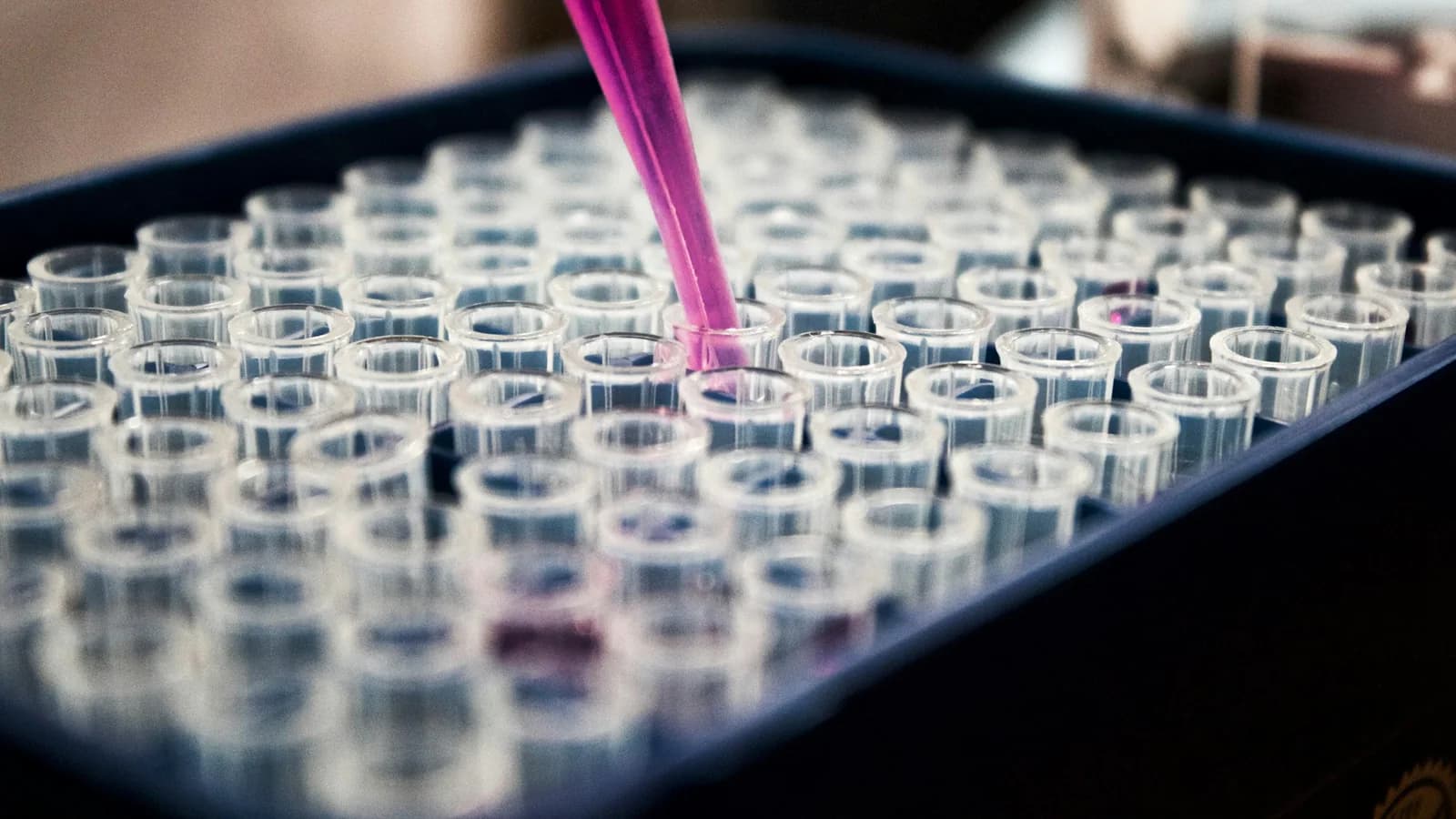
The convergence of precision agriculture, industrial biotechnology, and pharmaceutical-grade quality assurance systems is producing a new paradigm for botanical extract manufacturing. This whitepaper examines how the most advanced CBD extraction facilities are applying biotechnological tools—from genomic cultivar selection to AI-driven process control—to produce cannabinoid ingredients that meet pharmaceutical specifications consistently and at industrial scale.
The Precision Agriculture Foundation
The purity of a CBD isolate is determined by the quality of the hemp biomass long before it reaches an extraction vessel. Biomass composition—cannabinoid profile, terpene content, moisture, heavy metals, pesticide residues—is primarily determined by genetics, cultivation practice, and harvest timing. Industrial extractors who understand this invest heavily in upstream agricultural inputs.
Genomic cultivar selection has emerged as the most powerful lever for cannabinoid yield optimization. Next-generation sequencing has enabled breeders to identify specific genetic markers associated with high-CBD, low-THC phenotypes, dramatically accelerating the development of chemovars that consistently produce biomass with ≥12% CBD content. For extraction economics, chemovars matter: a hemp variety delivering 12% CBD biomass requires half the extraction throughput of a variety delivering 6% CBD biomass to produce equivalent isolate output.
Precision soil management applies site-specific nutrient management to control the macro and micro-nutrient profile that influences not only yield but heavy metal uptake. Hemp is a phytoremediator—it accumulates cadmium, lead, and arsenic from soil. Controlled cultivation on monitored soils with documented heavy metal baselines is the only defensible approach for pharmaceutical-grade biomass production.
Harvest timing optimization is more complex than it appears. CBD concentration peaks at pre-maturity flower development, but THC accumulation accelerates through the same developmental window. Harvesting 7–14 days before full botanical maturity—as measured by trichome density and cannabinoid ratios from weekly field testing—can reduce THC content by 20–30% while preserving 90%+ of maximum CBD yield. Precision harvest timing requires access to portable HPLC or NIRS systems for field-level cannabinoid monitoring.
Supercritical Extraction Process Control
The supercritical CO₂ extraction process contains over a dozen critical process parameters that collectively determine extract purity and composition. Managing these parameters at the batch level in small facilities is straightforward; managing them consistently across multiple extraction vessels, multiple shifts, and multiple biomass lots at industrial scale requires a fundamentally different approach.
Process analytical technology (PAT) refers to a framework, promoted by the FDA since 2004, for real-time measurement and control of critical quality attributes during manufacturing. Applied to supercritical extraction, PAT enables:
- Inline UV-Vis spectroscopy: Real-time monitoring of extract cannabinoid concentration as it exits the separation vessel, enabling automatic pressure and flow adjustments to maintain target concentration windows
- Inline near-infrared (NIR) moisture sensing: Monitoring biomass moisture entering the extraction vessel (excess moisture reduces extraction efficiency; critical process parameter)
- Real-time mass balance: Tracking inlet CO₂ flow, outlet flow, and separation vessel weight changes to calculate extraction yield in real time rather than waiting for post-batch HPLC results
At Vetrux CBD, our extraction management system integrates PAT data streams from all 12 extraction vessels into a unified process dashboard. Deviations from target parameter windows trigger automatic alerts; out-of-tolerance batches are quarantined before downstream processing. This closed-loop process control approach has reduced batch-to-batch cannabinoid concentration variability from ±8% (pre-implementation) to ±1.8% (current performance).
Molecular Distillation: Engineering at the Nanoscale
Short-path molecular distillation is the step that converts supercritical extract—a complex mixture of cannabinoids, terpenes, pigments, and minor plant compounds—into high-purity CBD distillate suitable for subsequent isolation. The physics of molecular distillation operate at the molecular mean free path scale: at pressures below 0.001 mbar, molecules travel from the heated evaporator surface to the cooled condenser surface without intermolecular collisions, enabling separation of compounds by boiling point differences measured in single-digit degrees Celsius.
The key engineering parameters:
- Evaporator temperature: CBD and other major cannabinoids distill at 180–220°C at molecular distillation pressures. Precise temperature control (±0.5°C) is required to prevent thermal degradation of CBD to CBN (a common degradation product that reduces isolate purity)
- Vacuum depth: Achieving and maintaining <0.001 mbar requires high-capacity vacuum systems and leak-free vessel construction. System leaks above this threshold cause selective cannabinoid degradation
- Feed rate: Throughput vs. purity tradeoffs are governed by the ratio of evaporator area to feed volume per unit time. Overloading the evaporator reduces separation efficiency; underloading reduces throughput below economic viability
Multiple-pass distillation is standard practice for pharmaceutical-grade CBD production. First-pass distillation ("crude distillate") achieves 70–80% CBD purity; second-pass distillation achieves 85–92% purity. Third-pass distillation, which we apply selectively, achieves 92–96% purity suitable as a direct input to crystallization. Each additional distillation pass improves purity but reduces yield by 3–8% due to evaporation losses and separation inefficiency at the purity boundaries.
Crystallization: From Chemistry to Engineering
CBD isolate production—achieving 99%+ CBD purity in solid crystalline form—is accomplished through a process borrowed from pharmaceutical API manufacturing: recrystallization from solvent. The phase behavior of CBD in common solvents (pentane, heptane, and in some facilities, ethanol) is well-characterized; CBD crystallizes selectively as the solution is cooled from saturation temperature to crystallization temperature, while the remaining impurities (minor cannabinoids, residual pigments, waxes) remain in the liquid mother liquor.
Critical engineering considerations:
- Supersaturation control: Crystallization must be induced by controlled cooling rather than evaporation to achieve uniform crystal size distribution. Rapid crystallization produces small, irregular crystals with higher surface area that trap impurities in the crystal matrix. Slow, controlled crystallization at precisely managed cooling rates produces large, uniform crystals with high purity and excellent filtration characteristics
- Seed crystal addition: Industrial crystallization processes typically employ "seeding"—introducing a small quantity of high-purity CBD crystals to initiate controlled nucleation at a defined temperature. Seeding eliminates the unpredictability of spontaneous nucleation
- Washing and drying: After filtration, crystal beds are washed with chilled solvent to remove surface-adhered mother liquor, then dried under controlled temperature and vacuum to achieve final moisture specification (typically <0.5%)
Quality Systems: Where Biotechnology Meets Pharmaceutical Standards
The biotechnological sophistication of the processes described above is only commercially valuable if it is documented and verified to pharmaceutical standards. This is where ISO 9001 quality management systems and cGMP (current Good Manufacturing Practice) frameworks earn their commercial relevance.
Batch records in pharmaceutical manufacturing document every material input (lot numbers, COAs, quantity), every process parameter (temperature logs, pressure logs, operator records), and every quality test result associated with a single production batch. The batch record is the evidence that the manufacturing process was executed in accordance with validated procedures.
Analytical validation establishes that the testing methods used to measure product quality are fit for purpose. HPLC methods for cannabinoid quantification must be validated for specificity, linearity, accuracy, precision, detection limit, quantitation limit, and robustness—following ICH Q2(R1) guidelines. Method validation records are subject to regulatory inspection.
Change control governs how manufacturing processes can be modified. In a cGMP environment, changes to critical process parameters (extraction temperature, crystallization cooling profile, drying time) require formal change control assessment, validation studies demonstrating that product quality is maintained, and updated batch record documentation. This prevents the quality drift that occurs when informal process changes accumulate over time.
The integration of biotechnological process innovation with pharmaceutical quality systems is the defining characteristic of a next-generation CBD extraction facility. The technology creates the capability; the quality system creates the evidence that the capability is exercised consistently.
This whitepaper was prepared by the Vetrux CBD Research Division. Full technical specifications, validation data, and process documentation are available to pharmaceutical-grade B2B partners under appropriate confidentiality agreements.
About the publisher
VETRUX Technical Content Team
CBD raw-material and sourcing context
VETRUX publishes practical material-handling, documentation, and supplier-qualification guidance from the perspective of a CBD raw-material supplier in Chuxiong, Yunnan.
Learn more about VETRUX →

